
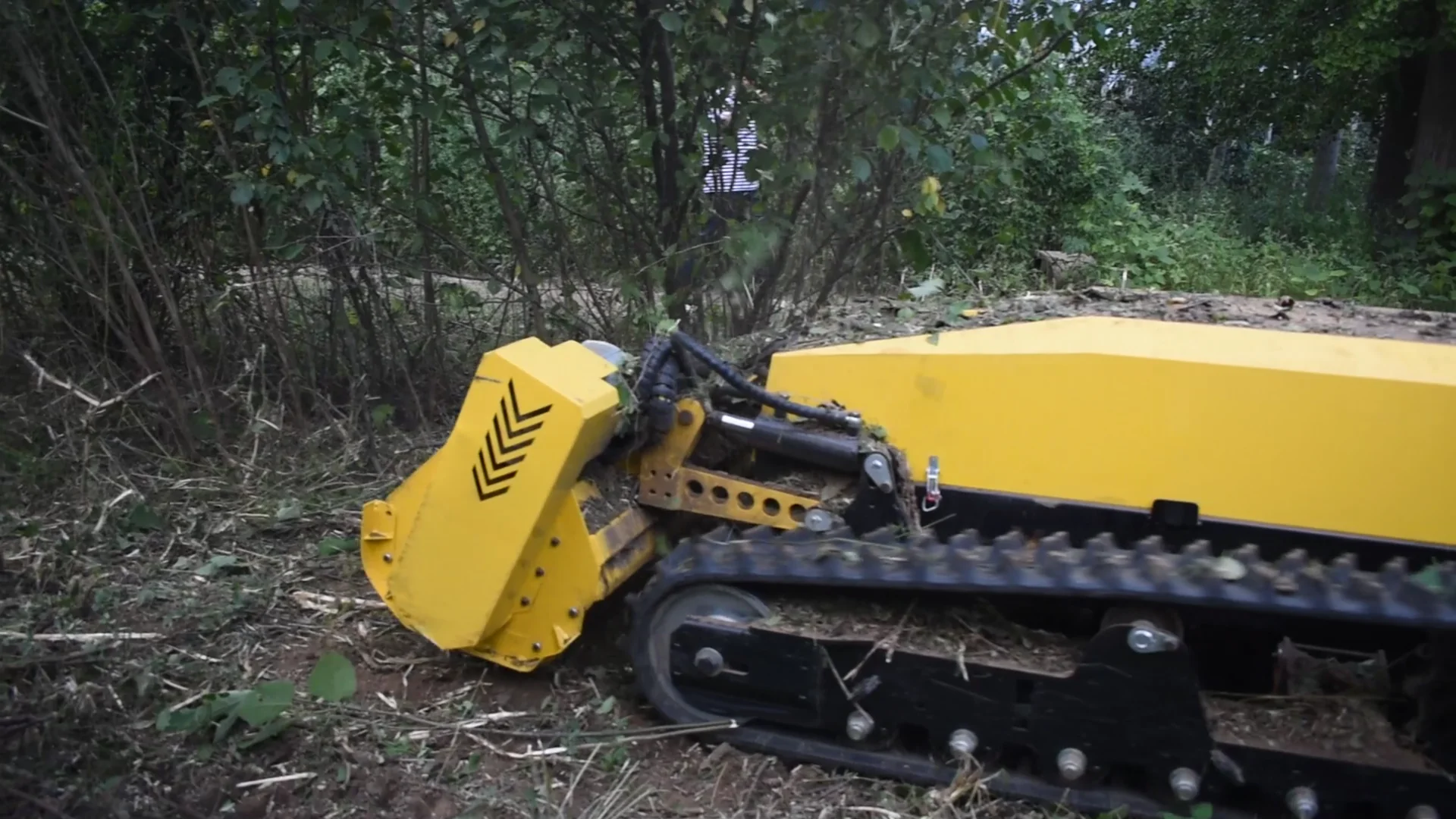
A solar site is not mowed once. The same rows are mowed again and again for the life of the asset — which is exactly why the work is worth automating.
Why vegetation is an operating issue, not a tidiness issue
Vegetation on a solar site is not cosmetic. Shading reduces output, and industry guidance notes that even modest shading of a panel can cost a disproportionate share of its production. Vegetation near the panel line also creates a fire load in exactly the place you least want one, and it complicates access for inspection and maintenance.
That is why mowing is scheduled several times across a growing season rather than treated as a one-off clearing job.
What the work actually costs
Published research on solar site vegetation management gives a sense of the scale. A study in the journal Sustainability reports a median mowing cost of about USD 121 per acre, or USD 0.74 per kWdc, for sites using a native-vegetation management practice.
That figure is third-party published data, not a TOSEN price, and it varies widely with site layout, access, terrain and how many cuts a site needs per year. The point is not the exact number. The point is that the cost recurs every season, on every hectare, for the life of the plant.
The parts of solar mowing that make it awkward
- Narrow strips. The work happens between rows, where wide machines simply do not fit.
- Repetition. The same area needs controlling again and again, so labour hours stack up fast.
- Strings and cables. Debris thrown by a cutting head is a risk near ground-mounted infrastructure.
- Terrain. Many sites sit on sloping or uneven ground that is hostile to ride-on equipment.
Why this is a good fit for automation
Repetitive work over a defined area is the easiest kind of task to automate. Once an operator defines the working area, positioning and route planning can take over the pass-by-pass mowing inside it, while the operator monitors status and progress from a mobile device.
Electric drive supports that approach rather than competing with it. It removes the engine maintenance schedule, keeps exhaust out of the working environment, and provides the electrical and control platform that positioning, machine control and battery monitoring all run on.
If you manage a solar site
The useful starting questions are practical ones: how many hectares need control, how many cuts per season, what gradients are involved, and where the narrowest practical working strip is. Those answers decide the machine size and the route plan far more than any brochure headline.