
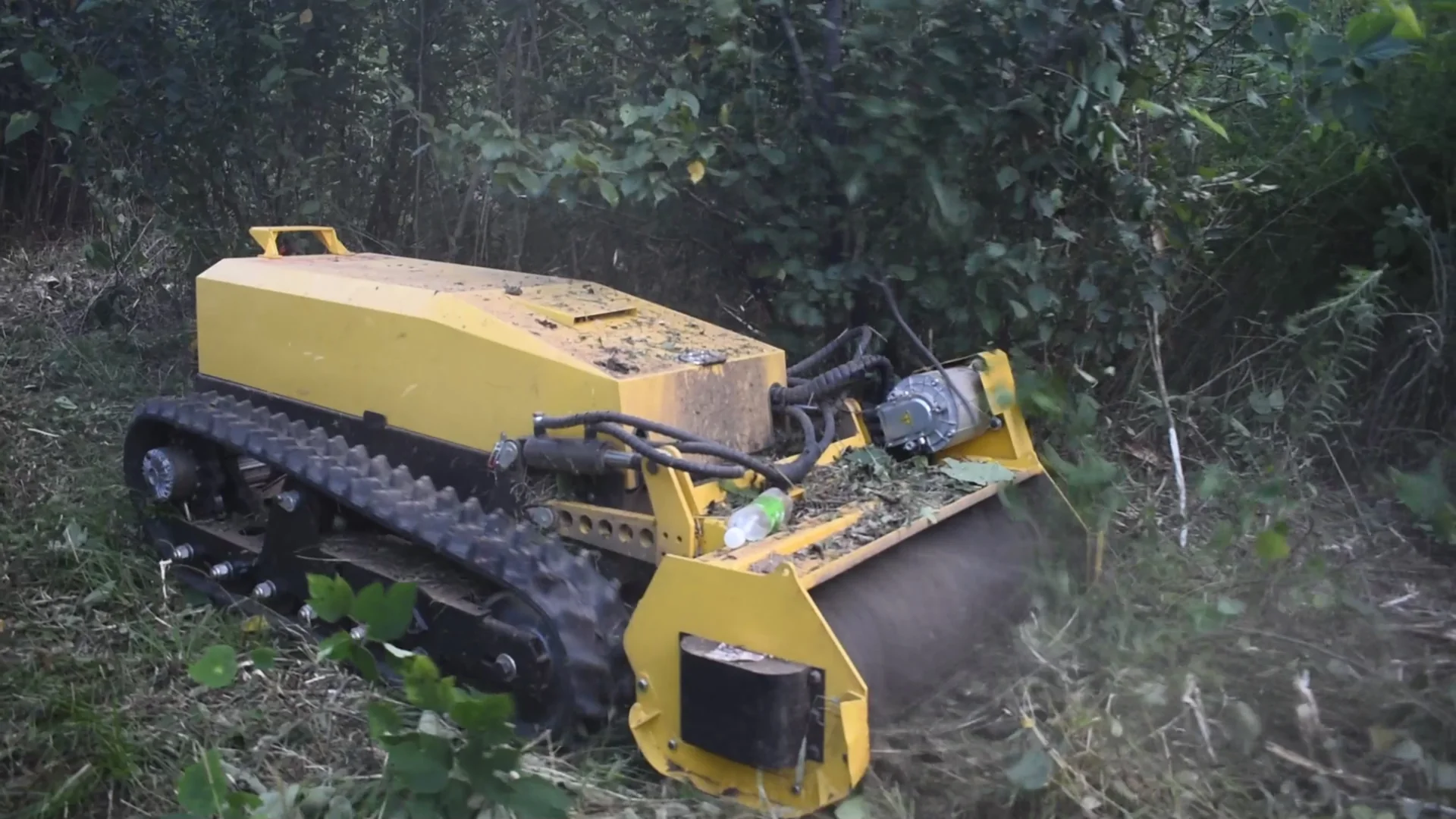
For a commercial mower, the purchase price is only part of what you pay. Energy, maintenance and the days lost to breakdowns decide whether the machine earns its keep.
1. Less routine maintenance around the engine
There is no petrol engine, so there is no engine oil to change, no spark plugs and no carburettor to service. On dusty sites you also remove the engine air intake filter from the maintenance schedule entirely.
The machine is not maintenance-free. You still look after the cutting system, the tracks, cooling and the electrical components. What changes is the category of work that disappears — the recurring engine service that a petrol machine needs whether or not it is earning.
2. Energy cost per hectare
Diesel and petrol prices move, electricity prices also move, but the gap between them is usually wide. Our current working estimate, in Chinese yuan, is:
| Energy source | Estimated cost / hectare |
|---|---|
| Petrol | RMB 75–90 |
| Electricity | RMB 7.5–9 |
That is roughly one tenth of the energy cost in this estimate — the kind of difference that matters on sites mowed again and again through the season.
3. Slopes and sustained work
A combustion engine has to stay within its designed operating angles to keep lubrication and fuel supply working properly. Electric motors avoid those engine-related constraints.
That makes electric drive useful for sustained work on banks and slopes. It does not make the machine unlimited: the whole unit still has to operate within its tested limits, because balance and track grip decide what is actually safe.
4. Working environment
Removing the engine takes away a source of noise and vibration, and there are no engine exhaust gases at the machine. The cutting system still makes noise, but the engine noise is gone — a real difference in parks, orchards and anywhere people are working nearby.
What to ask on a demo
- How many hours of work does one charge actually deliver on your type of ground?
- What charging setup does the site need, and when would charging happen?
- Which engine service items disappear from your schedule — and which parts still need servicing?
- What slope limits are tested and documented, not just advertised?
Choosing a mower still comes down to the job, the working hours and the charging you have available. For regular commercial mowing, electric power deserves a serious look.